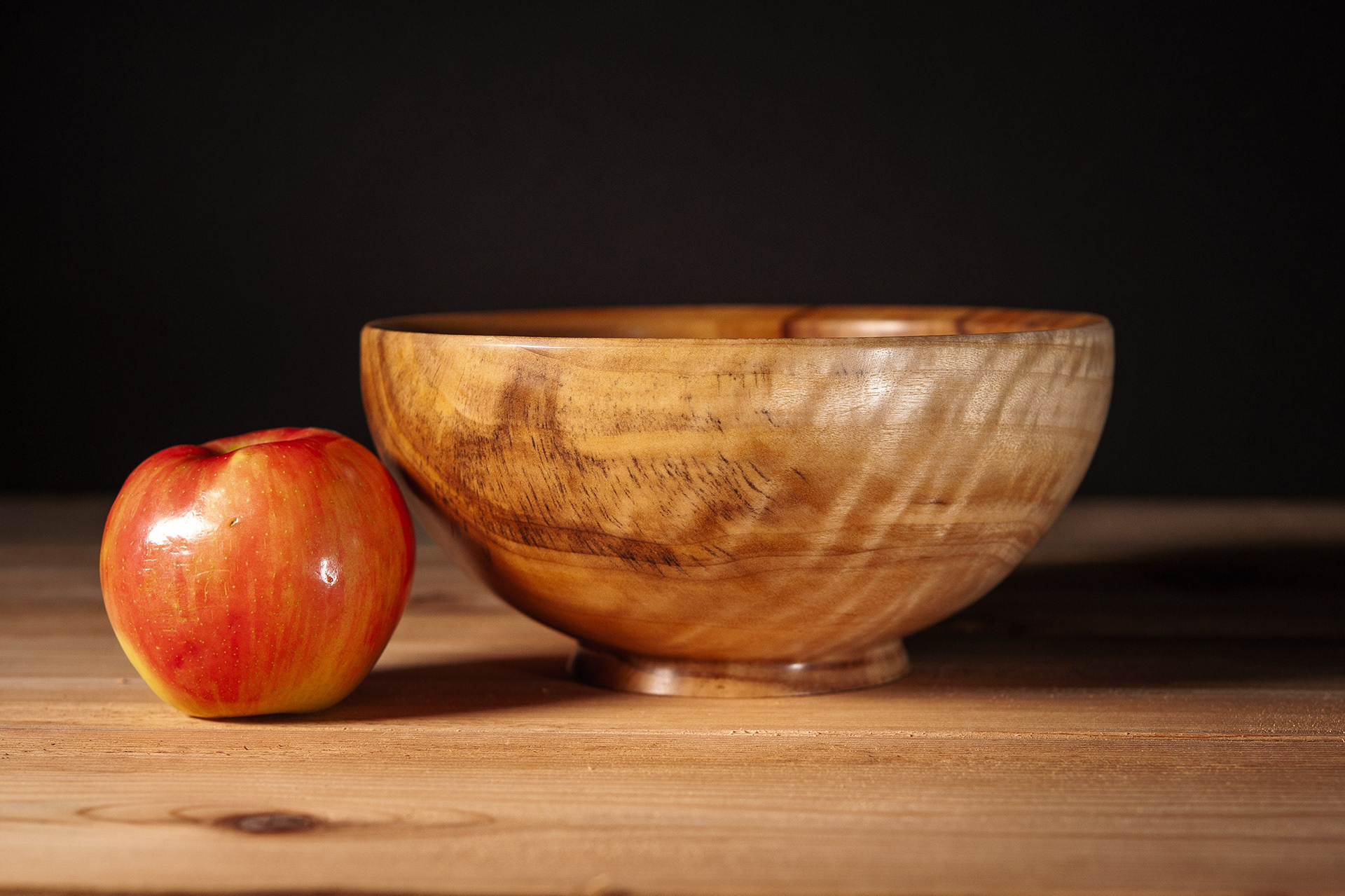
These are just a few of the products currently available at my ETSY shop
For more listings, please visit goldsteinwoodworks.etsy.com
Ambrosia beetles tunnel into the wood but don't actually eat it — they carry fungal spores on their bodies and "farm" the fungus inside the tunnels as food for themselves and their larvae. As the fungus spreads through the surrounding wood, it stains the grain in streaks of gray, blue, or brown, radiating out from tiny beetle holes.
What makes it interesting for a bowl: the staining pattern is entirely the fungus's path through the wood, not something you can plan or control — every ambrosia maple piece carries a one-of-a-kind map of where the beetle and its fungus traveled.


Ash has a straight, open grain and a light, warm color that takes a smooth finish well — it's one of the more classic-looking bowl woods, closer to what most people picture when they think "wood bowl." This piece came from a storm-damaged ash tree, cut and turned entirely by hand.


This bowl started as a black walnut tree from a friend’s back yard in Eagan, MN — storm-damaged, salvaged, and turned entirely by hand. Walnut's deep brown color and rich grain make it one of the most sought-after woods for furniture and bowls alike. 11" x 3", finished with food-safe walnut oil.


This bowl started as a cottonwood tree growing along a slow-moving creek — years of contact with thick, muddy water stained the grain with natural streaks of gray and black you won't find in drier wood. Salvaged, cut, and turned entirely by hand.